

Finding an active hornet nest on your property is unsettling, and handling it the wrong way can turn a manageable problem into a painful one. Hornets defend their nests aggressively, and a nest that looks small from the outside is often much larger inside a wall void, shed, or tree cavity. Here’s what to know before you deal with one, and why Eastern Pine Pest Control treats hornet nest removal as a job for trained technicians, not a weekend project.
What Is a Hornet Nest?
In Massachusetts, most nests homeowners call “hornet nests” belong to one of two insects. The bald-faced hornet builds the large, gray, football-shaped paper nest most people picture, usually hanging from a tree branch, shrub, or the eave of a house. The European hornet is a true hornet and tends to nest inside cavities instead, hollow trees, wall voids, sheds, and sometimes attics, which makes its nests harder to spot until activity picks up.
Both build their nests from chewed wood fiber and saliva, and both colonies grow through the summer, peaking in size in late summer and early fall before dying off with the first hard frost. That peak period is when most removal calls come in, since nests are largest and hornets are most defensive.
Why Hornet Nest Removal Isn’t a DIY Job
Store-bought aerosol sprays promise a quick fix, but they create real risk. Hornets release an alarm pheromone when disturbed that calls the rest of the colony to attack, so a nest that seems quiet can produce dozens of defenders within seconds. Multiple stings in a short period are dangerous for anyone, and can be life-threatening for someone with an allergy.
- The visible part of a nest is often smaller than the colony inside it
- Spraying from a distance rarely reaches the nest’s interior chambers
- An incomplete treatment can scatter and provoke the colony instead of eliminating it
- Nests built inside walls or attics require the right access point, not just the right product
A trained technician has the protective equipment, the right products, and the timing to remove a nest in one visit without turning it into an emergency room trip.
Where Hornet Nests Are Commonly Found
Hornets look for shelter that’s stable, protected from weather, and close to food sources like other insects and sugary plant sap. Around Massachusetts homes, that usually means:
- Bushes, shrubs, and hedges, especially dense ones close to a house or walkway
- Tree branches and low limbs
- Eaves, soffits, and roof overhangs
- Sheds, garages, and other outbuildings
- Wall voids and attic spaces, especially for European hornets
- Hollow trees and old stumps near the property line
Bushes and hedges are worth checking often, since a nest tucked inside dense foliage can grow for weeks without being noticed, right up until someone brushes past it while trimming the yard or walking to the door.
If you’re looking for more information on identifying hiding spots, our guide to hidden yellow jacket nests covers many of the same locations, since yellow jackets, hornets, and other stinging insects tend to favor similar spots around the home.
Hornet Nests Aren’t Always Out in the Open
Watch how quickly a nest can take shape in a bush, hedge, or other hiding spot around your property.
Follow @easternpinepest on Instagram →How Eastern Pine Removes Hornet Nests Safely
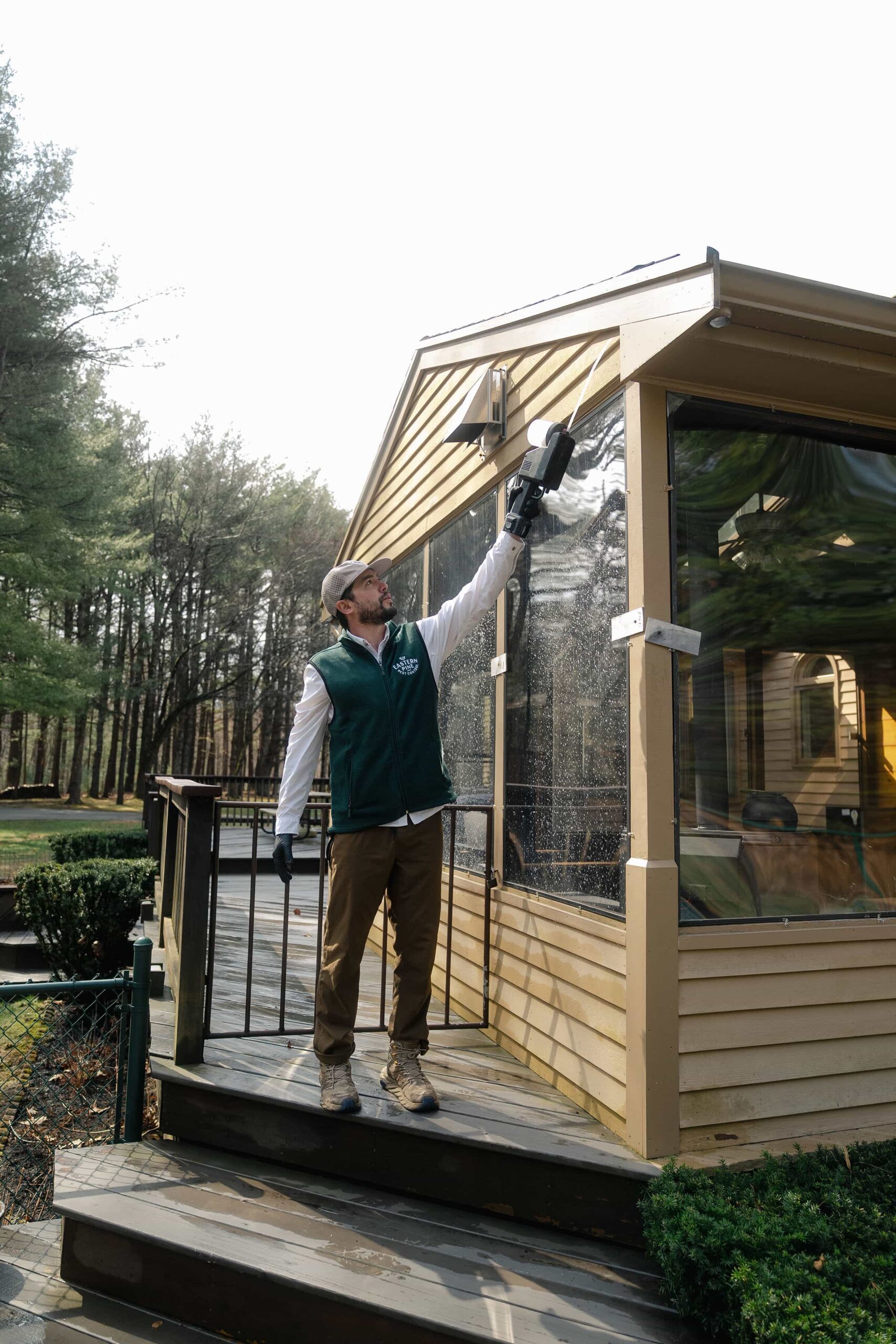
Eastern Pine’s approach to hornet control follows Integrated Pest Management principles: the right treatment, in the right location, in the smallest effective amount, not the heaviest spray we can find. Our hornet control services apply that same approach to every nest we treat, which typically looks like:
- Confirming the nest location and species before treating anything
- Treating during low-activity hours, typically early morning or evening, when hornets are calmer and more of the colony is inside the nest
- Applying a targeted treatment directly to the nest rather than the surrounding area
- Removing or knocking down the nest once activity has stopped, so it isn’t reused or reoccupied
- Checking for reentry points if the nest was inside a wall void, soffit, or attic space
People and pets should stay away from the treated area until it’s fully dry and the nest has been confirmed inactive.
When to Call a Professional
Not every stinging insect sighting needs a service call, but a few situations should move you to schedule an inspection right away:
- The nest is near a door, walkway, or another high-traffic area
- Anyone in the household has a known allergy to stings
- The nest is inside a wall, attic, or another space you can’t safely access
- You’ve noticed hornets entering and exiting the same small gap or opening
- The nest has grown noticeably over the past week or two
Once an active nest has been removed, an ongoing Pest Prevention Plan can help catch new activity in the same nesting spots each season, often before it grows into a full-size nest again.
Frequently Asked Questions
Is it safe to remove a hornet nest myself?
It’s not recommended. Hornets defend their nest as a colony, and a disturbed nest can produce a large number of stings in a short amount of time, especially if the nest is larger than it appears from the outside.
How much does hornet nest removal cost?
Cost depends on the nest’s size, location, and accessibility. Contact Eastern Pine for an inspection and a specific quote for your property.
What time of day do you remove hornet nests?
Most removals happen early morning or evening, when hornet activity is lowest and more of the colony is inside the nest.
How do I know if it’s a hornet nest or a wasp nest?
Bald-faced hornets build large, enclosed, gray paper nests, usually hanging from a tree or eave. Other wasps, like yellow jackets, more often nest underground or inside existing cavities. If you’re unsure, a photo sent to our team is often enough to identify it before a visit, and our wasp control services cover yellow jackets and other wasp species if that’s what you’re dealing with instead.
Will hornets come back to the same spot?
Hornets don’t reuse an old nest, but a location that offered good shelter once can attract a new colony the following season. Sealing entry points and checking known nesting spots each spring helps prevent repeat activity.
Schedule Hornet Nest
Removal Today
If you’ve spotted an active hornet nest on your property, don’t wait for it to grow. Our team will inspect, identify the species, and remove it safely.
Submit a Request