
Why Pet-Friendly Pest Control Services Matter for Essex County Homeowners
Pet-friendly pest control services use targeted treatments, low-toxicity EPA-registered products, and application methods specifically designed to eliminate pests without putting your animals at risk.
Here’s what you need to know right away:
Quick answer: What to know about pet-friendly pest control
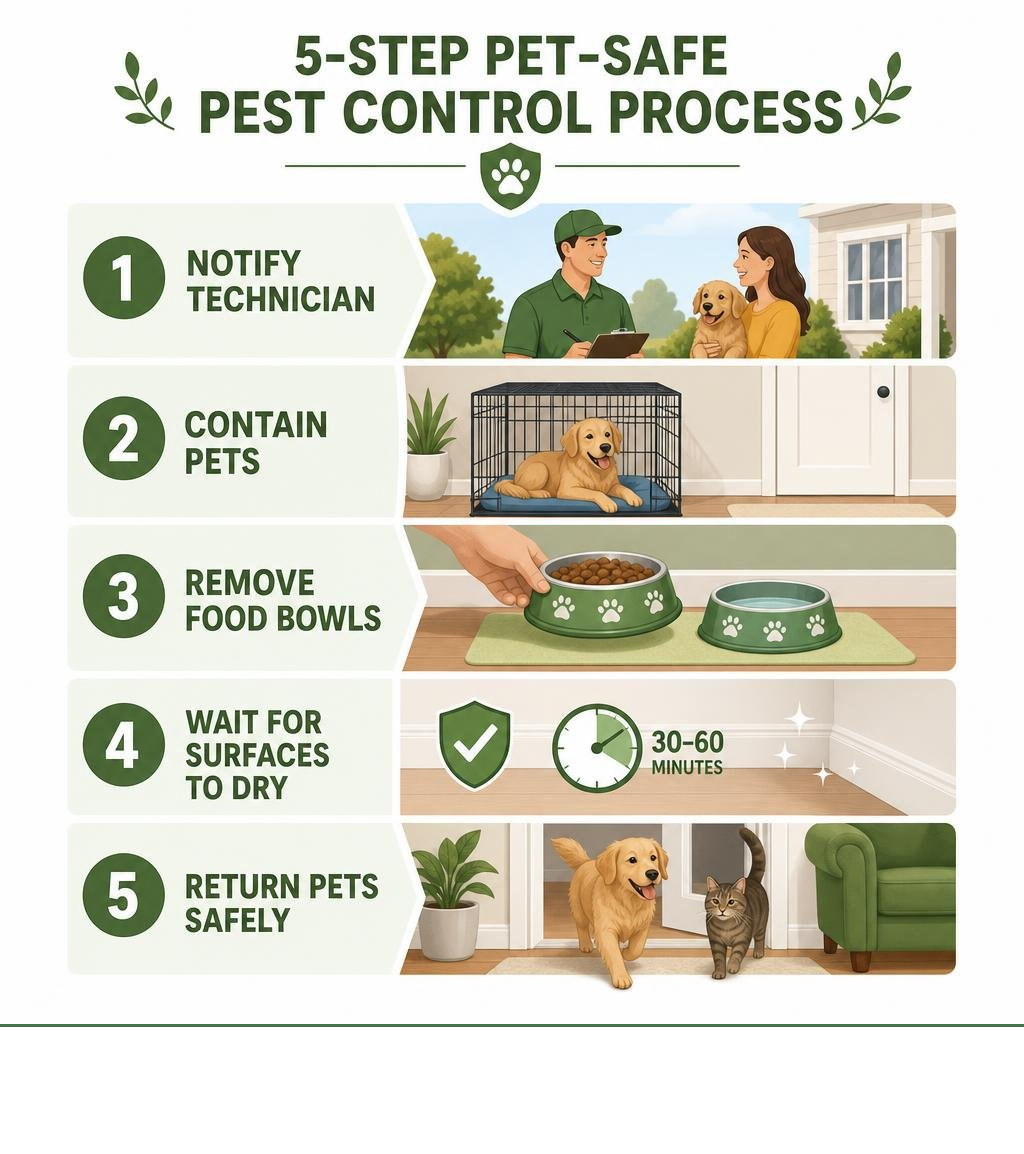
- Pets don’t need to leave the home in most cases — they just need to stay off treated surfaces until dry (typically 30–60 minutes)
- Products are applied at very low concentrations — usually less than 1% active ingredient — effective against insects but safe for mammals once dry
- Fish tanks, bird cages, and reptile enclosures require extra precautions like covering tanks and turning off air pumps
- Tell your technician about all pets before treatment begins — this shapes where and how products are applied
- Natural or DIY pest control isn’t automatically safer — some substances marketed as “natural” can still harm pets if used incorrectly
If you’re a homeowner in Beverly, Danvers, Ipswich, South Hamilton, or elsewhere in Essex County or northern Middlesex County, Massachusetts, you already know the challenge: pests are a real problem in our wooded, coastal communities — and many households have pets to protect at the same time.
The good news? Professional pest control doesn’t force you to choose between an effective treatment and your pet’s safety. When done right, it protects both.
This guide covers everything you need to know — from how pet-safe products work, to how to prepare your home, to what to do if your dog walks across a treated baseboard.
What Are Pet-Friendly Pest Control Services?
To many homeowners, the phrase “pest control” conjures up images of old-school exterminators in heavy respirators, drenching baseboards in harsh, foul-smelling chemicals while families and their pets evacuate for days. Thankfully, professional treatments have become more precise, targeted, and safety-conscious.
Today, pet-friendly pest control services focus on smart, low-impact science. Rather than saturating a property with broad-spectrum pesticides, trained technicians utilize Integrated Pest Management (IPM). This method emphasizes understanding pest behavior, sealing pest entry points, and using highly targeted treatments only where pests live and travel.
When chemical treatments are necessary, professional technicians prioritize low-toxicity, EPA-registered products. These formulas are designed to target the unique biology of pests (like interrupting an insect’s exoskeleton development or reproductive cycle) while carrying incredibly low mammalian toxicity.
Furthermore, these products are applied at extremely low concentrations — often less than 1 percent active ingredient. This concentration is high enough to eliminate small insects but poses no threat to humans, dogs, or cats once dry. By choosing Green Pest Solutions, homeowners can rest assured that their pest issues will be resolved without compromising the health of their furry family members. This same level of care and precision is also applied to local businesses through specialized Commercial Pest Control programs.
How Traditional Exterminating Differs from Pet-Friendly Pest Control Services
The primary difference between traditional exterminating and pet-safe protocols lies in how and where products are applied.
Traditional pest control historically relied on “broadcast spraying” — applying liquid chemicals across wide, open areas of floors, carpets, and lawns. This left a significant amount of active residue in areas where dogs and cats walk, sleep, and play.
In contrast, pet-friendly services rely on “crack and crevice” treatments and targeted baiting. Technicians apply tiny amounts of gel baits, dusts, or liquid treatments directly into wall voids, deep crevices, behind appliances, and inside structural gaps where pests hide. Because these areas are completely inaccessible to curious paws and snouts, the risk of exposure is virtually zero.
Additionally, pet-safe pest control relies heavily on structural pest prevention — sealing small gaps, repairing pest entry points, and reducing attractants — to keep pests out naturally. This philosophy of Pest Control Prevention Over Reaction ensures that chemical use is kept to an absolute minimum inside the living spaces of your home.
The Science of Pet-Safe Product Selection and Application
The safety of professional pest control isn’t just about where the product is placed; it’s also about how the product is engineered.
- Droplet Size Matters: Professional application equipment is calibrated to produce large droplet sizes. Unlike fine mists or aerosols that hang in the air and pose an inhalation risk, these heavy droplets fall out of the air immediately and settle onto the targeted surfaces. This drastically reduces any risk of airborne exposure for both humans and pets.
- Low Mammalian Toxicity: The active ingredients are carefully selected to have low mammalian toxicity. Many professional pest control products use advanced chemistry that targets biological systems unique to insects, leaving mammals unaffected when products are applied according to the label and allowed to dry.
- Non-Toxic Trapping and Monitoring: In many cases, a technician can resolve or monitor an infestation using entirely non-toxic mechanical traps, sticky boards, and pheromone lures. This allows for continuous protection without introducing any chemicals into the home.
By looking at our comprehensive Services Overview, you can see how these scientific principles are put into practice across residential treatment plans.
Protecting Different Types of Pets During Treatment
Every pet is unique, and a dog has very different biological vulnerabilities than a parrot or a goldfish. When executing pet-friendly pest control services, a professional technician will tailor their safety protocols based on the specific species living in your home.
Dogs and Cats
As mammals, dogs and cats share a similar biological makeup to humans, meaning they are highly resilient to low-concentration pest control products. The main rule for dogs and cats is simple: keep them out of the treatment area while the product is being applied, and do not let them back in until the treated surfaces are completely dry. Once dry, the product binds to the surface material and poses no threat to their paws or fur.
Special care is taken for cats, as their grooming behavior means they are more likely to ingest anything that gets onto their fur. Technicians will focus almost exclusively on crack-and-crevice applications in homes with cats to prevent any contact.
Birds
Birds have incredibly sensitive, highly attuned respiratory systems. Because of this, they are uniquely vulnerable to any airborne particles, vapors, or sudden changes in air quality. Even completely natural essential oils or minor cooking fumes can distress a bird.
During any indoor treatment, bird cages should be moved to a completely untreated, well-ventilated room on a separate floor, or temporarily relocated out of the house entirely until the treatment is finished and the home has been thoroughly aired out.
Fish and Reptiles
Fish and reptiles are cold-blooded, making them highly sensitive to traditional insecticides. Even a tiny trace of pesticide drifting into a fish tank can be lethal to aquatic life.
To protect fish, amphibians, and reptiles, homeowners must cover their aquariums or enclosures with a thick, damp towel or plastic sheeting, and temporarily turn off the air pumps. This prevents any airborne droplets from being drawn into the water or enclosure.
Special Precautions for Fish, Birds, and Reptiles
Because exotic pets require such precise care, communication with your pest control provider is critical. If you own birds, reptiles, or fish, always mention them during your initial phone consultation and remind the technician when they arrive at your property.
When treating a room with an aquarium, technicians will avoid any liquid spray applications in the vicinity. Instead, they will rely on localized gel baits placed deep within wall voids or behind heavy furniture where no airborne drift can occur. For homes with birds, the technician will often recommend focusing treatments on the exterior perimeter of the home to prevent the need for indoor applications altogether.
Preparing Your Essex County Home for a Pet-Safe Treatment
A successful, worry-free pest control visit is a team effort. While professional technicians take every precaution on-site, there are several simple steps homeowners across Essex County and northern Middlesex County communities can take to prepare their living spaces before the service begins.
Step-by-Step Home Preparation for Pet-Friendly Pest Control Services
To ensure the safety of your animals and help your technician work as efficiently as possible, follow this quick preparation checklist:
- Communicate in Advance: Tell the company about all pets in your household, including their typical habits (e.g., “my dog likes to chew on plastic” or “my cat hides under the basement stairs”).
- Clear the Perimeter: Move pet beds, toys, scratching posts, and blankets away from the walls and baseboards. This gives the technician clear access to critical treatment areas while keeping your pet’s belongings completely clean.
- Remove Food and Water: Pick up all pet food and water bowls. Store them in a closed cabinet or pantry. If your pet eats dry kibble, make sure any open bags are sealed in airtight plastic containers to prevent pests from chewing into them.
- Secure Your Pets: Place your dogs or cats in a safe, untreated room (such as a bedroom or bathroom) with their food, water, and litter box. Keep the door closed and place a note on the door warning the technician that pets are inside. Alternatively, have a family member take the dog for a walk during the service.
- Cover Exotic Enclosures: Cover fish tanks, bird cages, and reptile terrariums as detailed in the safety protocols above.
By incorporating these steps into your routine, you can seamlessly transition into a year-round Pest Prevention Plan that keeps your home protected through every New England season.
Pests That Pose the Greatest Risk to Your Pets
It is easy to worry about the potential risks of pest control products, but the reality is that the pests themselves often pose a far greater threat to your pets’ health than the treatments used to eliminate them.
Living in wooded and coastal Essex County communities like South Hamilton, Beverly, Danvers, Topsfield, and Wenham means pets can encounter pests that create health and sanitation concerns around the home. Professional pest control is a vital line of defense that keeps your pets safe from unwanted pest activity:

How Rodent Control Helps Protect Pets
One of the most common questions pet owners ask is: “If my dog or cat catches a mouse that has eaten rodent bait, will my pet be poisoned?” This concern is known as secondary poisoning.
To prevent this, professional pest control companies use highly specific protocols for rodent control:
- Tamper-Resistant Bait Stations: All rodent baits used around homes are secured inside heavy-duty, lockable plastic stations. These stations are anchored to the ground or structure so they cannot be shaken, chewed through, or moved by dogs. Inside the station, the bait is secured on metal rods so rodents cannot carry the bait blocks out into the yard.
- Low-Hazard Baits: Professional rodenticides are formulated to break down quickly in the rodent’s system. For a dog or cat to experience secondary poisoning, they would typically have to locate and consume multiple poisoned rodents over a short period.
- Focus on Prevention: The ultimate goal of professional rodent control is to help keep mice from getting inside in the first place, reducing the need for chemical baits.
For homeowners looking for safe, targeted ways to manage rodent populations around their property, professional Rodent Control can provide a structured approach built around inspection, prevention, monitoring, and targeted treatment.
Frequently Asked Questions About Pet-Safe Pest Control
How long do pets need to stay off treated surfaces after application?
For standard indoor liquid treatments, pets should stay off treated surfaces until they are completely dry, which typically takes 30 to 60 minutes. For exterior perimeter treatments, it is best to keep pets away from treated areas until the product has dried completely. Ensuring good ventilation by turning on ceiling fans or opening windows can speed up indoor drying times.
Do I need to leave my home during a pet-friendly treatment?
No, you and your pets do not need to leave the house during a standard pet-friendly maintenance treatment. You only need to keep your pets contained in an untreated room or area while the technician applies the product. Once the treated areas are dry, your pets can roam freely.
What should I do if my pet accidentally contacts a treated surface before it dries?
If your pet walks across a wet treated surface, don’t panic. Immediately wash their paws with mild pet shampoo or dish soap and warm water to prevent them from grooming and ingesting the wet product. If you notice any unusual behavior, drooling, or skin irritation, contact your veterinarian immediately and provide them with the product details, which your technician can easily supply.
Conclusion
Protecting Essex County and northern Middlesex County homes from pests doesn’t have to come at the expense of our pets’ well-being. By partnering with a knowledgeable local professional who specializes in Integrated Pest Management, you can enjoy a cleaner home and a thriving, healthy pet.
Eastern Pine Pest Control is proud to serve South Hamilton, Beverly, Danvers, Reading, and the greater Essex County and northern Middlesex County area with family-safe, highly effective pest solutions. If you are ready to secure your home against pests while keeping your beloved animals completely safe, learn more about our specialized Pet-Friendly Pest Control services today.